

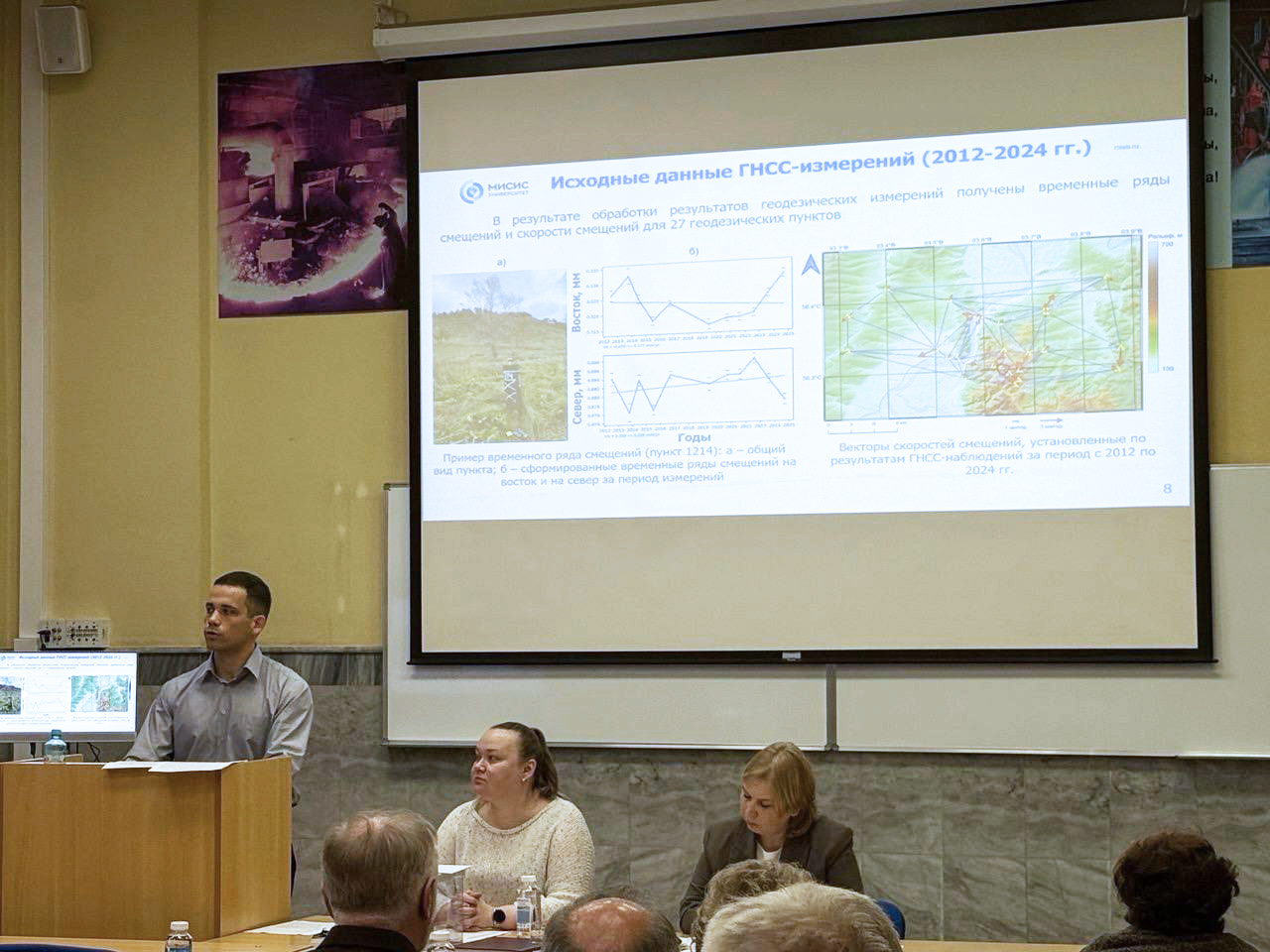
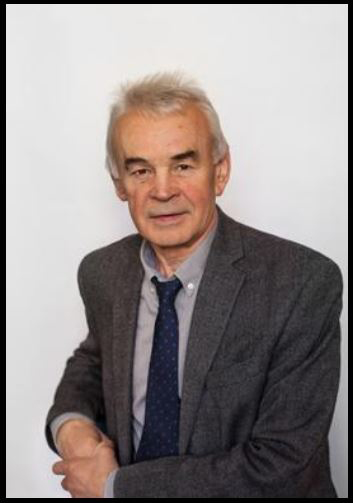
April 8, 2026. On April 8, 2026, at the Scientific Seminar of the Geophysical Center RAS, a report titled "Recognition of Magnetic Jerks from Ground-Based Geomagnetic Observatory Data" was presented by PhD Shamil Bogoutdinov, Leading Research Scientist at the Laboratory of Geophysical Monitoring of the GC RAS.
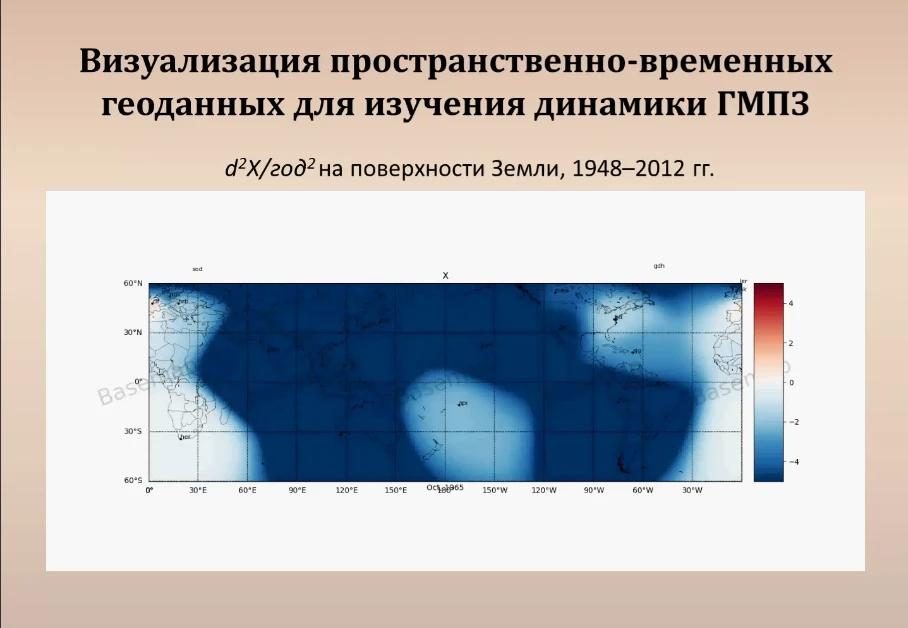
Recent studies show that the dynamics of the geomagnetic field's secular variation exhibit periodic patterns, indicating underlying wave processes in the Earth's core. The advent of satellite measurements of the full geomagnetic field vector, which began in 1999, has made it possible to create reliable and highly accurate models of secular variation that can be extended downward to the core-mantle boundary. These models have revealed rapid variations of the core field with a period of about 10 years. A 6-year quasi-periodicity in the second time derivative of the geomagnetic field has also been detected. The set of approaches developed at the GC RAS for processing observatory magnetic data has made it possible to continue research dedicated to identifying and studying the signal of the secular variation and secular acceleration of the Earth's main magnetic field based on these data. Comparison with the results of SV modeling obtained from satellite data shows a high agreement with the proposed method. The stability and reliability of SA impulse recognition are demonstrated using examples of well-studied SA impulses from 2006, 2009, and 2012. Moreover, as a result of applying the new approach to data from several observatories, several new SA impulses have been detected around 1996, 1999, 2002, and 2014. The latter provides a basis for applying the method to older historical data and studying SA impulses and geomagnetic jerks in earlier time periods. As a result, the existence of a 3-year quasi-periodicity of secular acceleration bursts of alternating polarity over a 90-year period (1932–2022) has been confirmed for the first time, i.e., from the beginning of systematic stationary ground-based geomagnetic measurements and long before the advent of satellite geomagnetic missions. It is important to note that the applied approaches do not involve the intermediate construction of a main field model, as is done in classical approaches.
The work was carried out in co-authorship with Corresponding Member of RAS Anatoly Soloviev, Director of the GC RAS, and PhD Roman Sidorov, Leading Research Scientist at the GC RAS.

 Analytical Geomagnetic Data Center
 Space weather parameters
 Virtual Magnetograms