

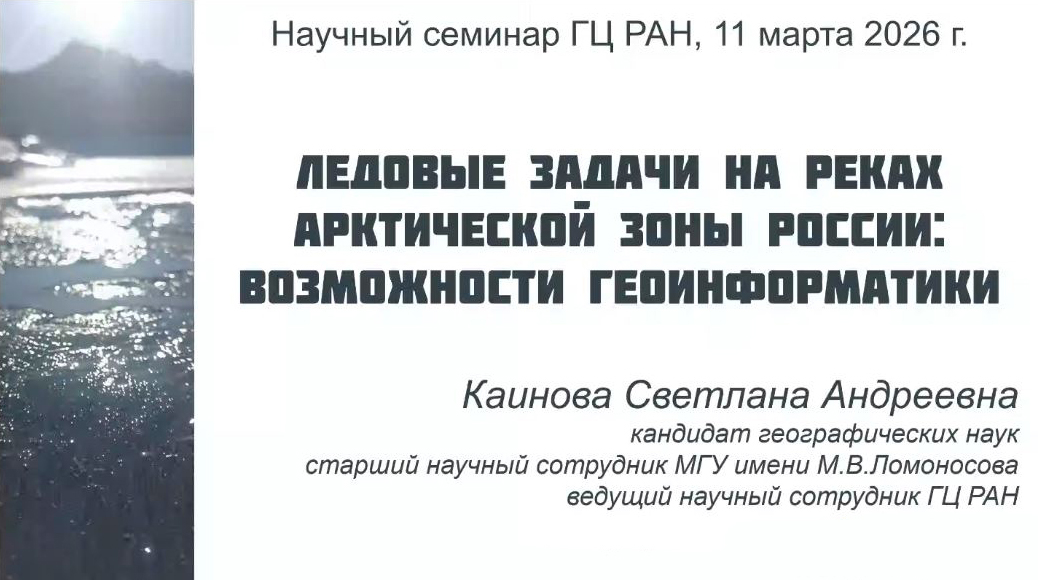
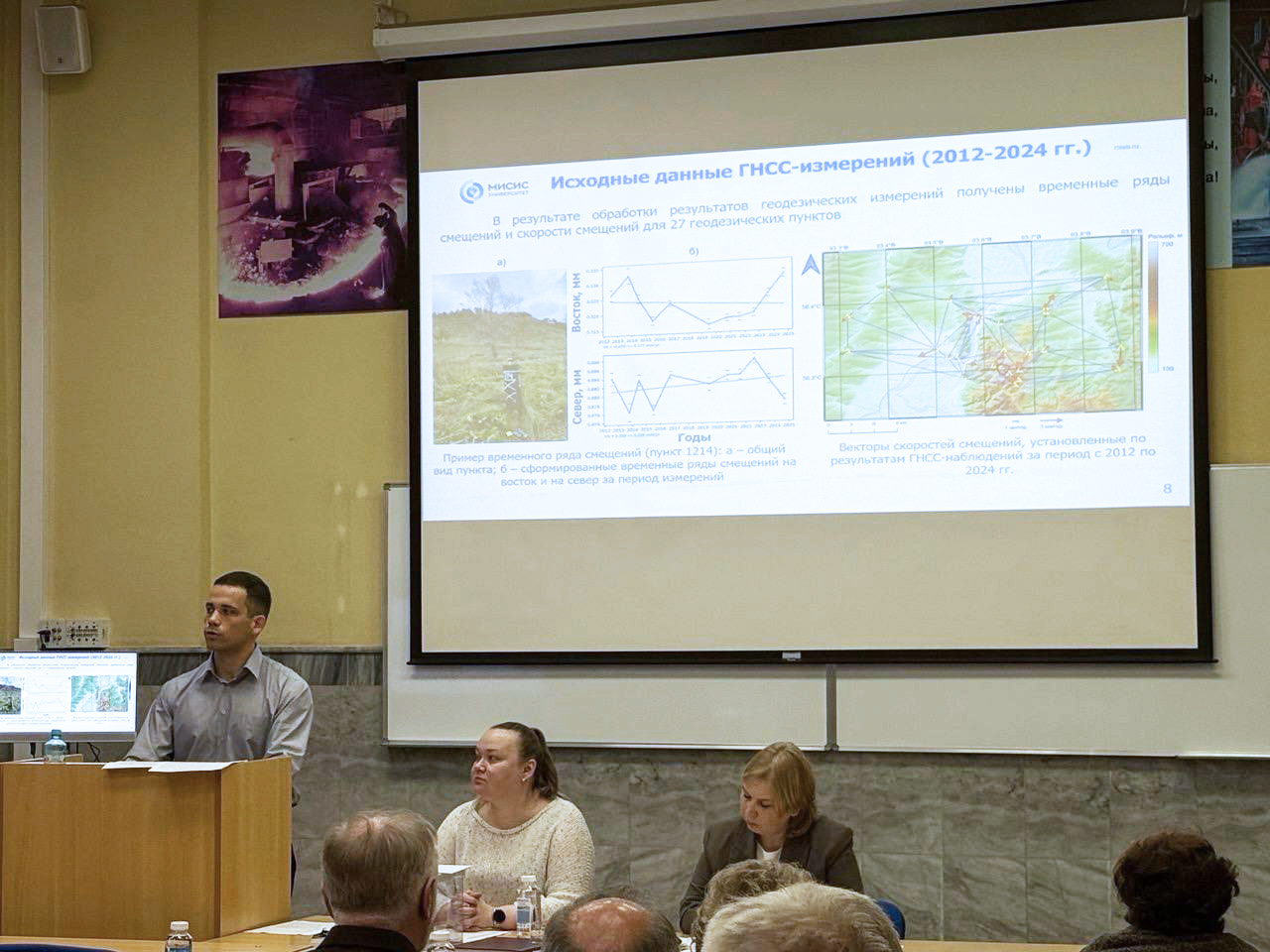
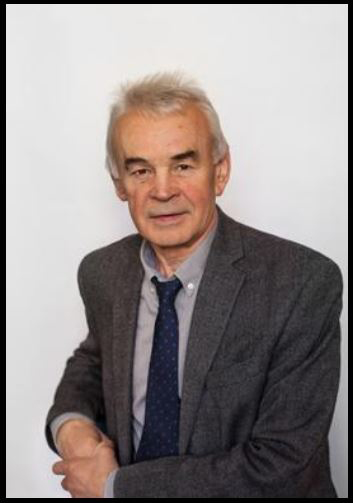
March 11, 2026. On March 11, 2026, the Scientific Seminar of the GC RAS was held. Leading Research Scientist at the Laboratory of Mathematical Geophysics at the GC RAS, Senior Research Scientist at the Department of Land Hydrology, Faculty of Geography, Moscow State University, PhD Svetlana Kainova presented a report titled "Ice Problems on the Rivers of the Arctic Zone of Russia: Possibilities of Geoinformatics".
The Arctic zone of Russia is characterized by a harsh climate, where ice phenomena on rivers are observed for most of the year. Many types of economic activities depend on the timing and duration of ice events, including shipping, the construction of ice crossings, and the operation of hydraulic structures. The impact of the ice regime on the population and economic activity is not limited to the direct impact and use of ice, but also includes a special regime of costs, water levels, water quality, and other components of the hydrological regime during periods with ice phenomena. Speaking of dangerous manifestations of the ice regime, there is often an unfavorable combination of hazardous water, ice regime, and riverbed processes.
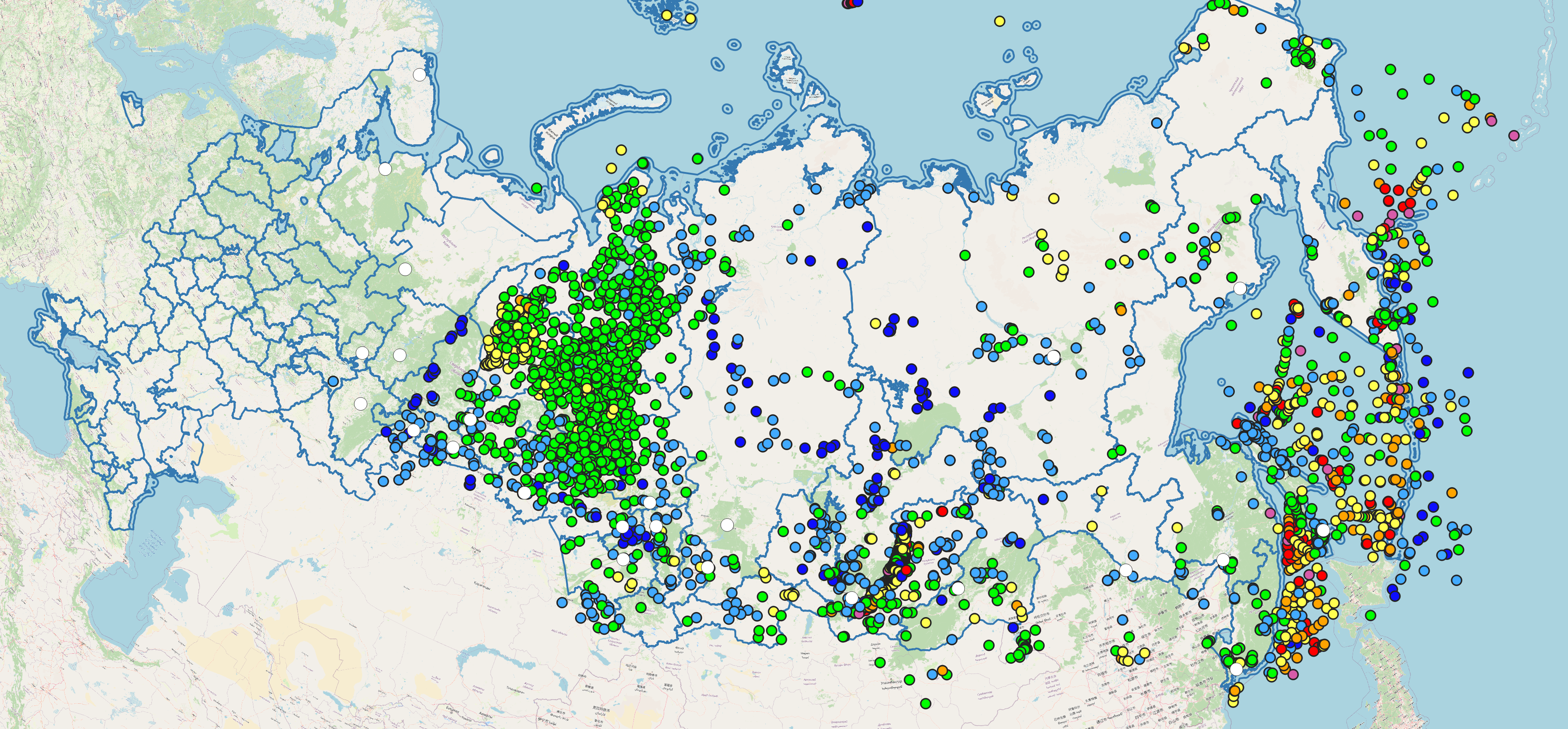
The existing network of hydrological posts operated by the Federal Service for Hydrometeorology and Environmental Monitoring provides long-term data on river regimes and observable measurements of the characteristics of both water and ice regimes. Another important source of information in ice hydrology is remote sensing data, which allows monitoring of snow cover characteristics in catchments, ice conditions on rivers, and flooding of territories during high water events.
The report outlined the main directions of modern hydrological research in the Arctic zone of Russia and presented examples of using contemporary information to address ice-related problems.

 Analytical Geomagnetic Data Center
 Space weather parameters
 Virtual Magnetograms